

INTERVIEW
At the Table with Nicolas L. Coleman: A Discussion around Food, Connection, and Storytelling As Part of His New Exhibition at EDJI Gallery in Brussels.
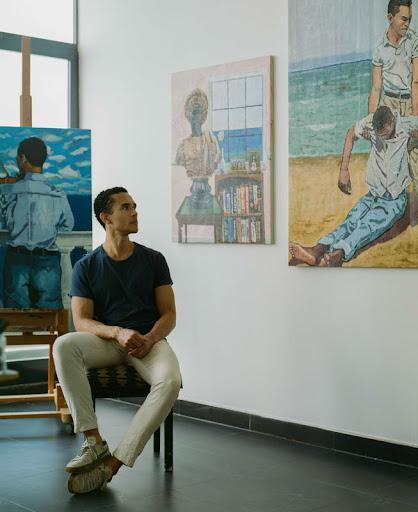
EDJI Gallery is pleased to present an interview with Swiss-American painter Nicolas L. Coleman, on the occasion of his first solo exhibition in Belgium, titled What Would You Like to Be for Dinner?.
Known for his figurative works rooted in autobiography, Coleman shares some insights into his creative process, the inspirations that drive him, and the stories behind his newest series of paintings exploring meals as universal rituals.
INTERVIEW
1. To begin, could you introduce yourself and share a little about your practice? What themes or ideas do you find yourself most drawn to?
My name is Nicolas Coleman. I am a painter originally from North Carolina and currently living in California. My work is mostly figurative, although I like to do still life and landscape paintings as well. My work is autobiographical, and I am usually taking themes and subjects from my own life and experiences. I try to explore the moments in which I find some spark of creativity, connection, or fascination with the world around me.
2. How does a new work usually come to life for you? Could you walk us through your creative process, from idea to final piece?
I often get an idea for a painting in real time as a moment is unfolding. Whenever I am in an interesting new place or having some new experience, I start to think about how I might capture it in a painting. I file these ideas away in my head until I am in my studio and ready to start painting. If I am working on a series as I was for this show, I will usually be more methodical about the actual drafting of a given painting as I want to ensure that it will fit within the larger body of work. But I try not to be overly structured in my process as to allow myself more freedom and spontaneity. Usually, I will work out a drawing directly on the canvas in charcoal so that I can revise a composition as I go along. I don’t normally do preparatory sketches or paintings, so I am often improvising when I start painting. The only constant is that I always start with the eyes when I am working on a figurative painting.
3. What have been some of the biggest influences on your work? Are there particular artists, movements, or personal experiences that continue to inspire or guide you?
In college I read T.J. Clark’s book The Painting of Modern Life about the origins of Impressionism as a reaction to the upheaval of modernity. That conception of the artist, and specifically the painter, as an interpreter of the beauty, contradictions, and intrigue of a changing world has always been the guiding principle of my work. While I love all kinds of art, old and new, some of my biggest inspirations are Alice Neel, Henri Matisse, Max Beckmann, and Henry Taylor. What motivates me more than anything is sharing my work with people and hearing the ways in which they feel connected to my paintings. I never insist that people approach my work with any particular feeling or expectation. I’m often surprised by what people take away from a given painting, and that’s part of the joy of being an artist.
4. This exhibition presents your newest series exploring moments around the table and the rituals of sharing meals. Could you tell us more about this body of work? What story or thread connects these pieces?
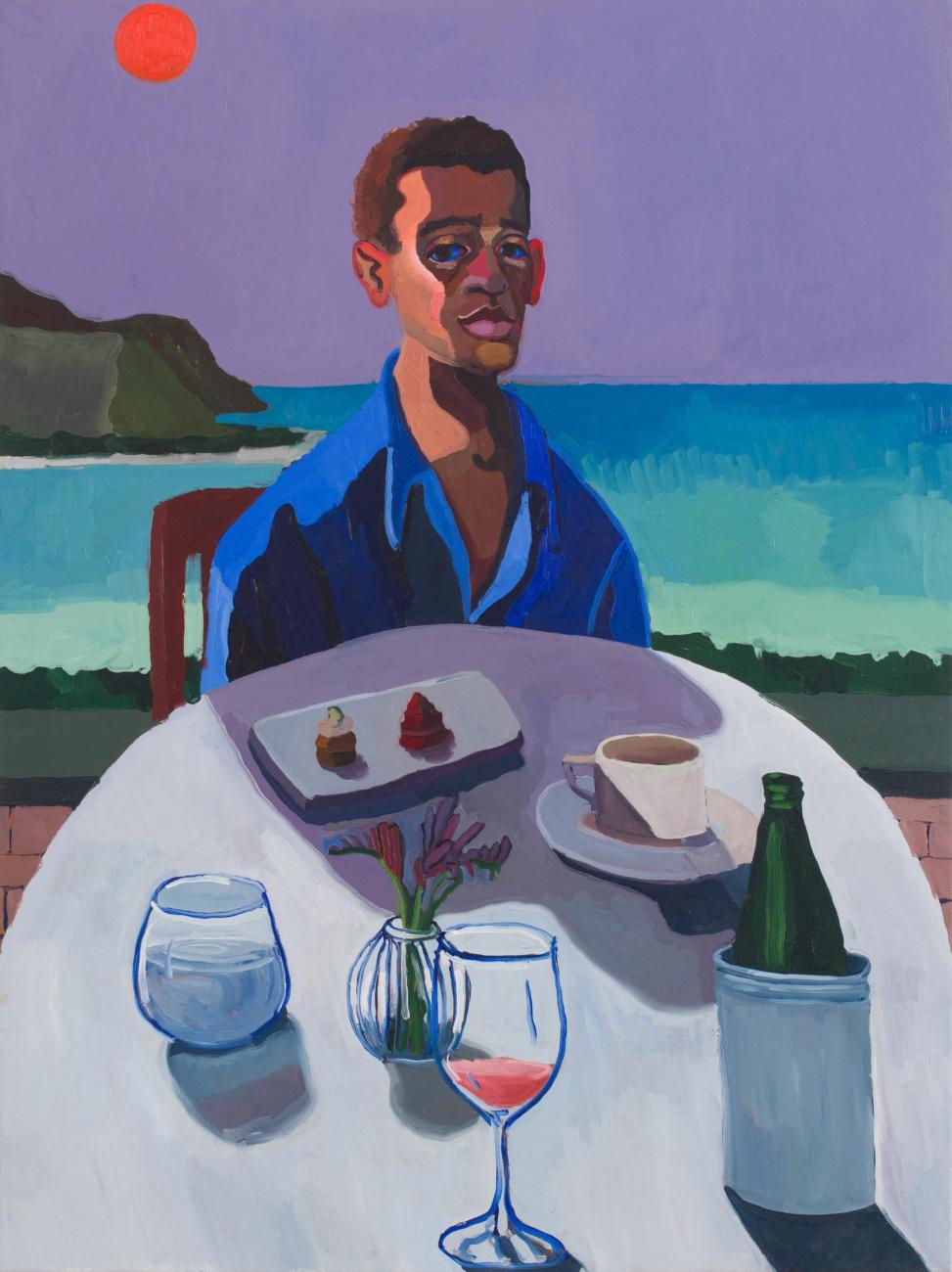
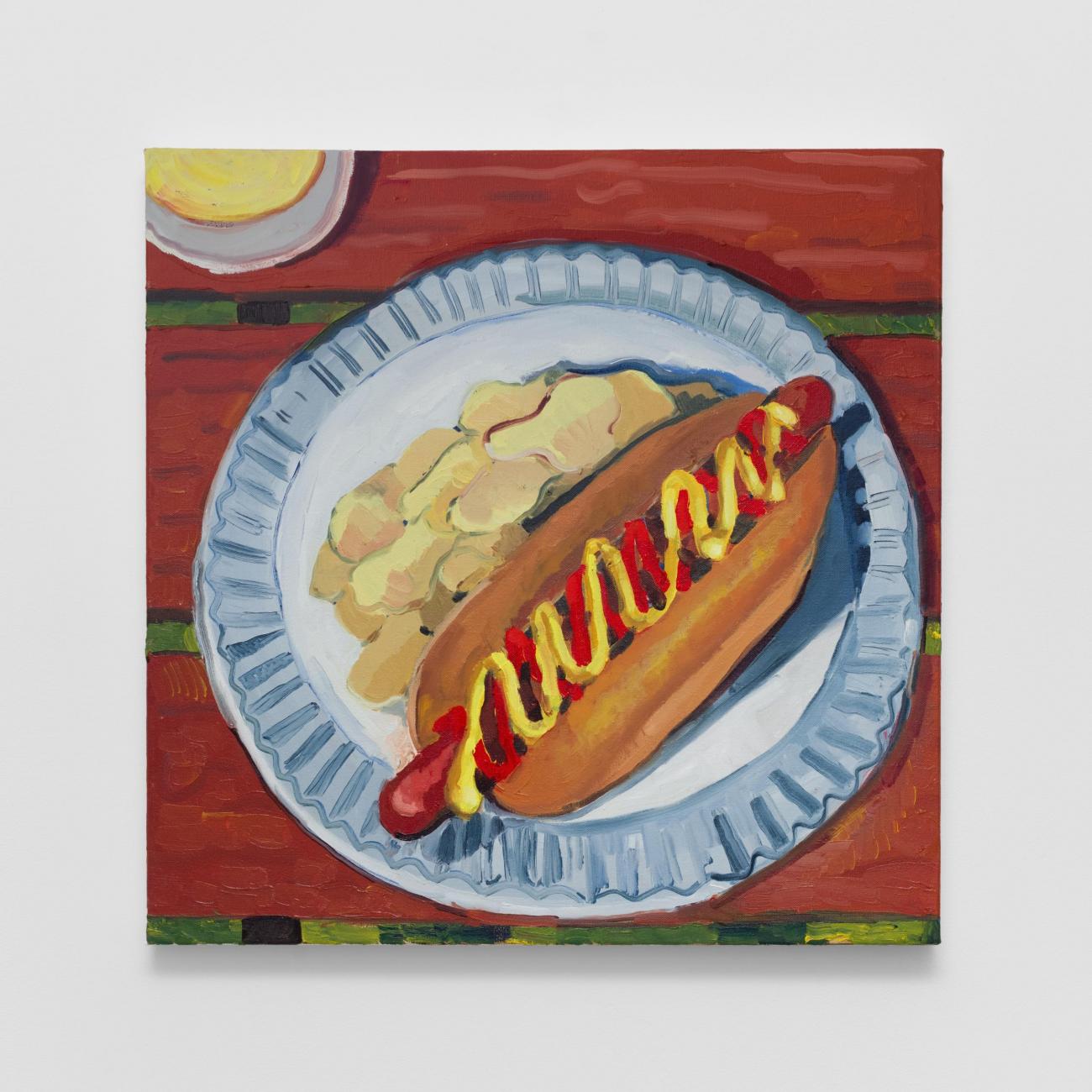
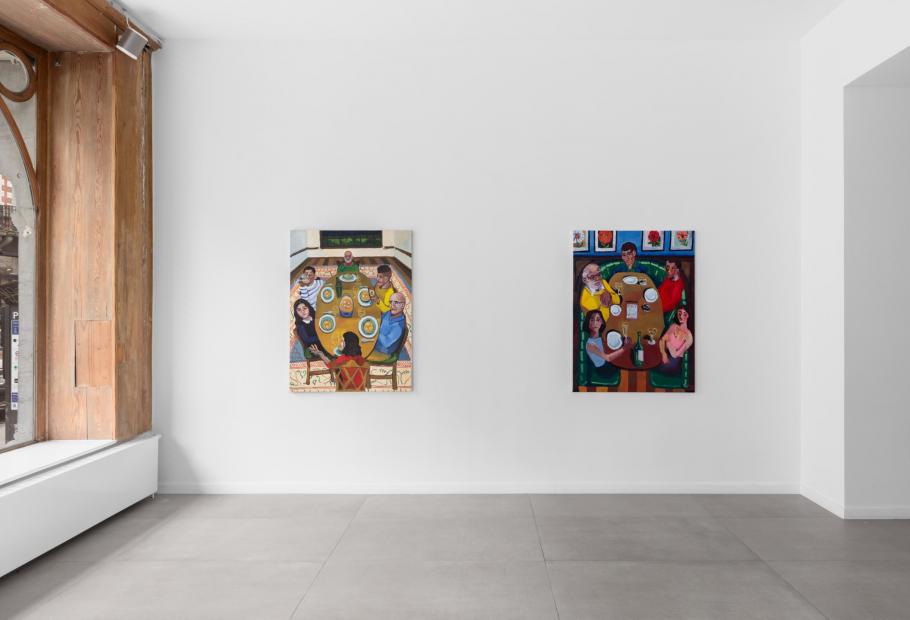
In May of 2024 I began a road trip with my girlfriend from Massachusetts to North Carolina and then across the country to California where we stayed for most of the summer. Toward the end of the summer, we visited Japan for two weeks before returning to California. While she flew back to the east coast, I drove by myself back across the country. A couple of weeks later I flew to Europe for the opening of an exhibition. When I finally returned home, I went into the studio thinking about how delightfully different all the places I had just visited were, from a town of less than ten thousand people in Wyoming to Tokyo to the South of France. I felt like I had seen close to the full range of the human experience in just a few months. I knew that I wanted to capture some of this feeling in my paintings and I wanted a central theme that could tie everything together. I chose dining as an act that was both universal but also very particular to a given place and its culture. On an individual level, the meals that we share become a huge part of our emotions, relationships, and memories. On a global level, food is one of the most elemental building blocks of any civilization. I had a lot of fun making these paintings because the possibilities within the theme were endless.
5. Looking ahead, you’re about to begin a new journey, studying law, while continuing your artistic career. How do you see these two paths influencing each other? Do you imagine your practice evolving in new directions alongside this chapter?
Much of what matters to me most as an artist is the same as what motivated me to study law: an interest in how people interact with each other, their culture, and society at large. We are in a precarious and uncertain moment where the future of everything from our social lives, our political processes, and our relationship with technology seems to be evolving at a frighteningly rapid pace. My art has always been primarily about my fascination with and love for human connection in all its complexity. Grappling with these questions in my art made me realize that I wanted to have a role in influencing what that future might look like that extended beyond what I was able to address in my studio practice. I am hopeful that my study of the law will allow me to more directly engage with the complex social questions that have fueled my work as an artist. I have never limited myself to just one pursuit or identity and, ultimately, I am confident that this new path will make me both a better artist and a better global citizen.
EXHIBITION
Nicolas L. Coleman’s reflections remind us how something as simple as a shared meal can open onto questions of culture, identity, and connection. The works in this exhibition turn everyday moments into lasting images, inviting viewers to reflect on their own experiences around the table.
What Would You Like to Be for Dinner? is on view at EDJI Gallery, Brussels, from September 4 to October 11, 2025.
Address: EDJI Gallery, 15 rue du Page, 1050 Brussels
For inquiries, please contact: hello@edjigallery.com
Photo credits : Lilah Benetti
What Would You Like to Be for Dinner?
Discover more about the exhibition and available works here